Plan Wardrobe Storage Around the Room, the Routine, and the Interior Atmosphere
For apartments, villas, hotel suites, serviced residences, and hospitality interiors, wardrobe planning is not only about adding storage. The way clothes, shoes, accessories, drawers, shelves, doors, lighting, and circulation are arranged can affect how private rooms feel and function.
A built-in wardrobe may suit compact bedrooms or repeated apartment units, while a walk-in closet can support a more layered suite or villa interior. The right direction depends on the room size, storage expectations, privacy level, and visual atmosphere the project needs to create.
George can help project teams review wardrobe and closet directions based on room dimensions, layout drawings, storage needs, finish preferences, reference images, site conditions, and installation needs. When these details are reviewed together, the storage direction becomes easier to align with the wider interior plan.
Start with Room Dimensions, Layout Drawings, and Room Schedules
A wardrobe or closet direction should begin with the room itself. Wall length, depth, ceiling height, circulation space, door position, and nearby furniture can all influence how the storage system should be reviewed.
For project teams working across multiple apartments, bedrooms, suites, or hospitality rooms, a room schedule can also help organize which spaces need built-in wardrobes, which may need walk-in closets, and which rooms may require a different storage direction.
Room dimensions and layout drawings give George a clearer understanding of the available space. Storage needs help define what the wardrobe should support: hanging clothes, folded clothing, drawers, shoes, accessories, open shelves, or display areas. Reference images can then help communicate the preferred atmosphere and visual direction.
By sharing these materials early, project teams can make the wardrobe review more focused and easier to coordinate.
Decide Between Built-in Wardrobes, Walk-in Closets, or a Mixed Direction
Not every room needs the same storage solution.
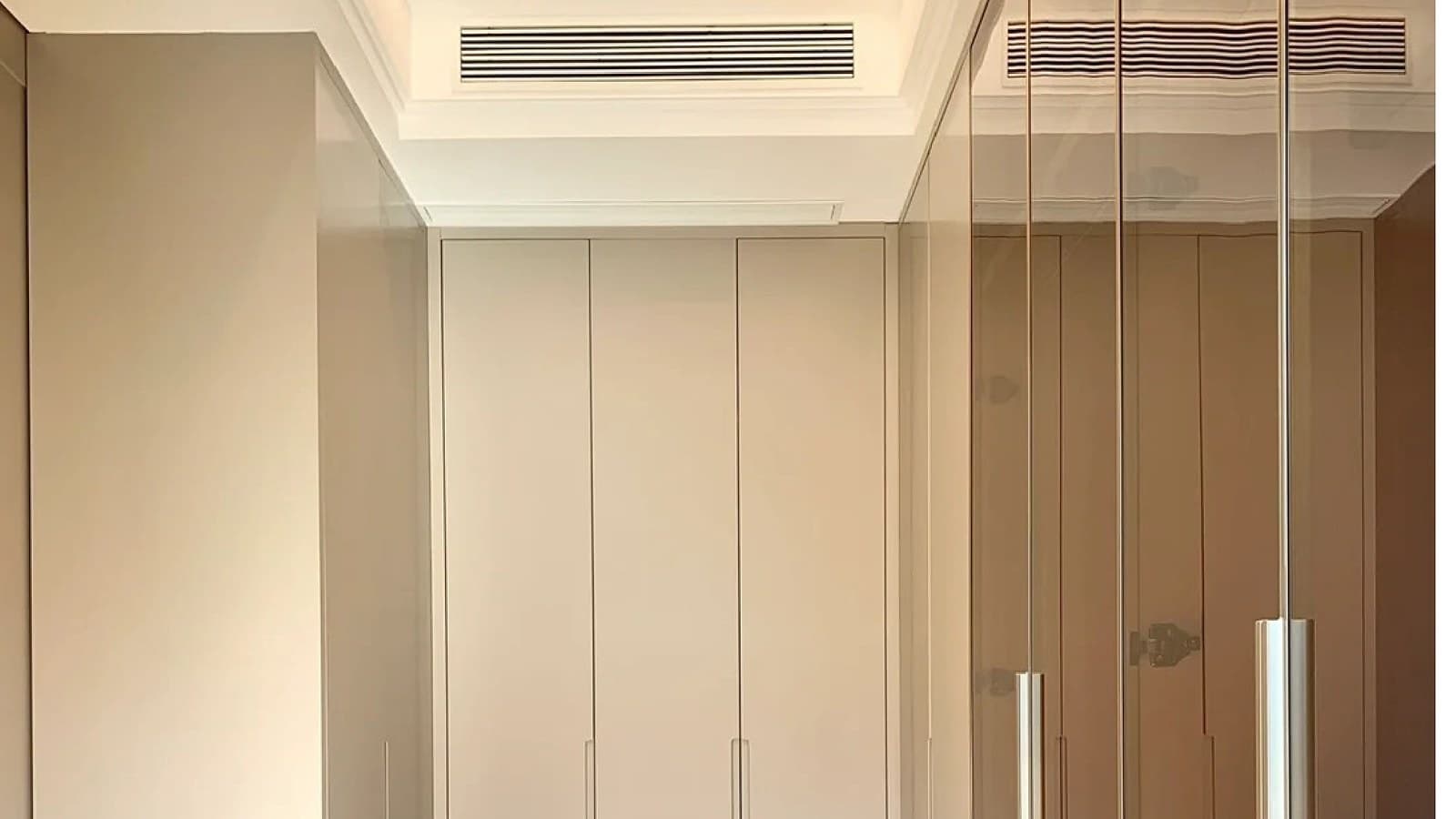
Built-in wardrobes can work well for bedrooms, apartment units, compact rooms, and repeated project layouts where the storage direction needs to be clear and space-efficient. They can support a clean interior look while keeping clothing and daily-use items organized within the room.
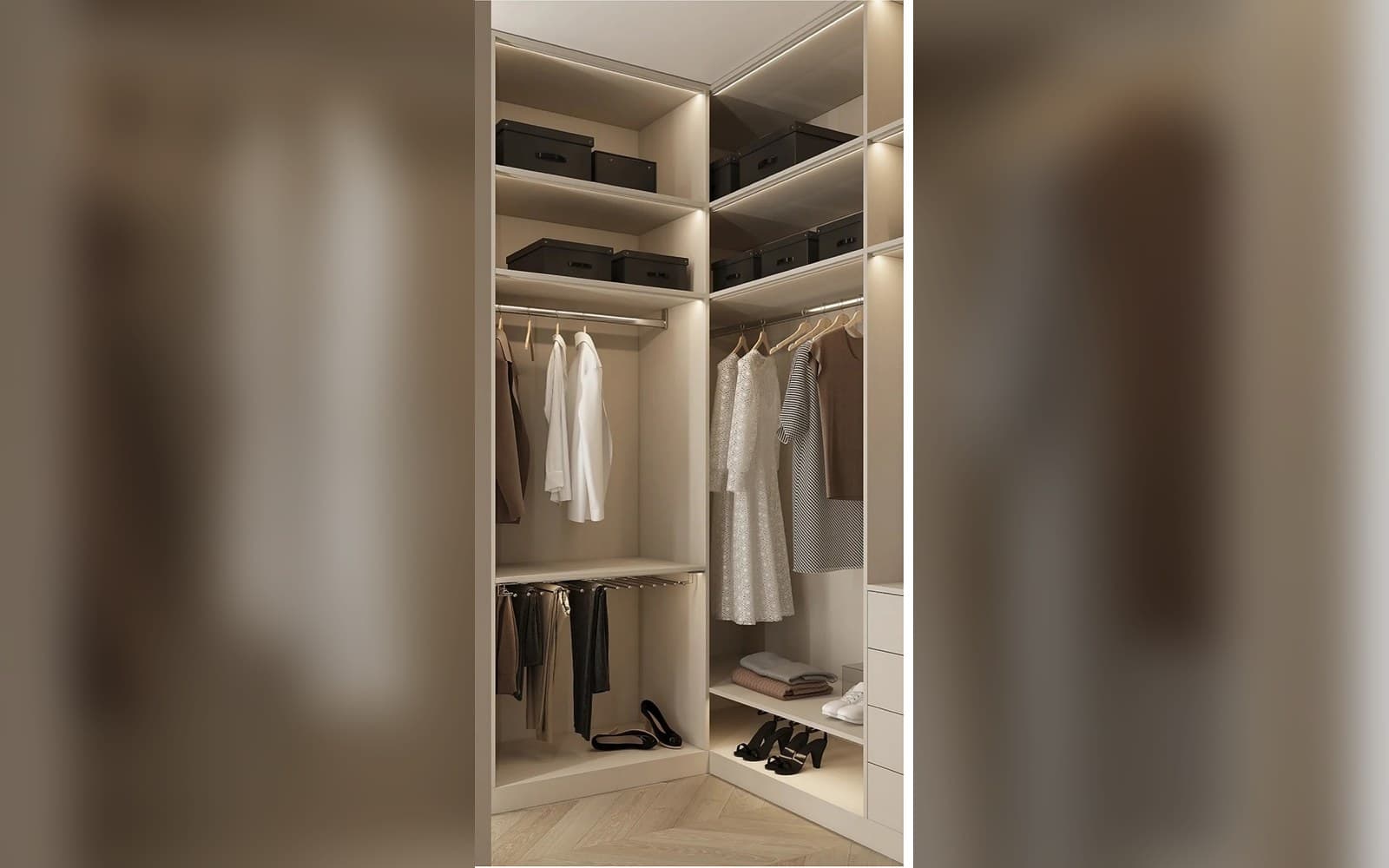
Walk-in closets can support larger suites, villas, serviced residences, and hospitality interiors where storage becomes part of the private-room experience. They can create a more layered storage area with hanging zones, open shelving, drawers, display sections, and a stronger lighting atmosphere.
Some projects may need a mixed direction. A bedroom may use a closed built-in wardrobe, while a suite or villa may include a more open walk-in closet. George can help review which direction is more suitable based on the room size, circulation, storage expectations, door style, and project brief.
Plan Storage Zones Before Selecting the Final Finish
A strong wardrobe direction usually starts with storage zoning.
Before selecting the final finish, project teams can review how different storage areas should work together. Hanging areas, drawers, folded clothing shelves, shoe zones, accessory storage, open shelves, and display sections may each play a different role in the room.
This step is especially useful for projects where the wardrobe needs to feel organized, not just visually attractive. Daily-use storage can be placed for convenience, while display areas can be reviewed for rooms that need a more open or refined closet atmosphere.
George can review these storage zones together with the project team, helping the wardrobe or walk-in closet direction respond to both daily function and interior style.
Coordinate Door Style, Finish Direction, and Lighting Atmosphere
Door style, finish direction, and lighting atmosphere can strongly influence how a bedroom, suite, or private room feels.
Closed panel doors can support a cleaner and quieter storage look. Glass-door wardrobe directions can create a more open display feeling. Open shelving can make storage more visible and accessible, while drawers and closed sections can keep daily-use items more private.
Finish direction can also help the wardrobe connect with the wider interior scheme. Color tone, surface preference, flooring, wall panels, lighting, and furniture direction should be reviewed together so the storage system feels connected to the room rather than added as a separate element.
Lighting atmosphere can be discussed as part of the visual direction. For walk-in closets and display-oriented storage, lighting can help shape the mood of the space and make the storage layout easier to understand.
Use Reference Images to Align the Project Direction
Reference images are useful because they help project teams communicate expectations before detailed review begins.
They can show whether the project prefers a clean built-in wardrobe, a more open walk-in closet, a glass-door display direction, warmer private-suite storage, or a simpler apartment wardrobe direction. They can also help clarify preferred color tone, door style, lighting mood, and the balance between open and closed storage.
For developers, designers, contractors, and procurement teams, reference images can make the discussion more visual. They help different stakeholders align on the intended atmosphere before George reviews suitable built-in storage directions based on the actual room conditions and project requirements.
Reference images are used to communicate direction. The final wardrobe or closet review should still respond to the project drawings, dimensions, storage needs, site conditions, and material brief.
What to Send George for Wardrobe or Closet Review
To make the review more efficient, project teams can prepare wardrobe or closet layout drawings, room dimensions, room schedule, storage needs, door style preference, finish direction, reference images, site photos or site condition notes, installation needs, and expected project use, such as apartment, villa, hotel suite, serviced residence, or hospitality interior.
The clearer these materials are, the easier it becomes for George to understand the storage direction, review suitable built-in storage directions, and coordinate the next step with the project team.
If your team already has drawings, room dimensions, or reference images, George can help review the next suitable direction for your built-in wardrobe or walk-in closet review.
Review Built-in Wardrobe and Closet Directions with George
Send George your wardrobe or closet drawings, room dimensions, room schedule, storage needs, finish direction, reference images, and site conditions. Our team can help review suitable built-in wardrobe and walk-in closet directions for your project.