Plan the Kitchen Around the Project, Not Only the Cabinet Style
For apartments, villas, hotels, serviced residences, and commercial interiors, kitchen cabinetry is rarely just a matter of choosing a cabinet look. A well-prepared kitchen direction depends on the room layout, storage needs, appliance positions, countertop use, finish preference, and site conditions behind the project.
That is why custom kitchen cabinetry should start from project information, not from random product images alone.
Our team can review kitchen cabinetry options by looking at layout drawings, BOQ, room schedules, material briefs, reference images, and installation needs together. This makes the early coordination process clearer before the project moves into deeper material matching and next-step project coordination.
Start with Layout Drawings and Project Documents
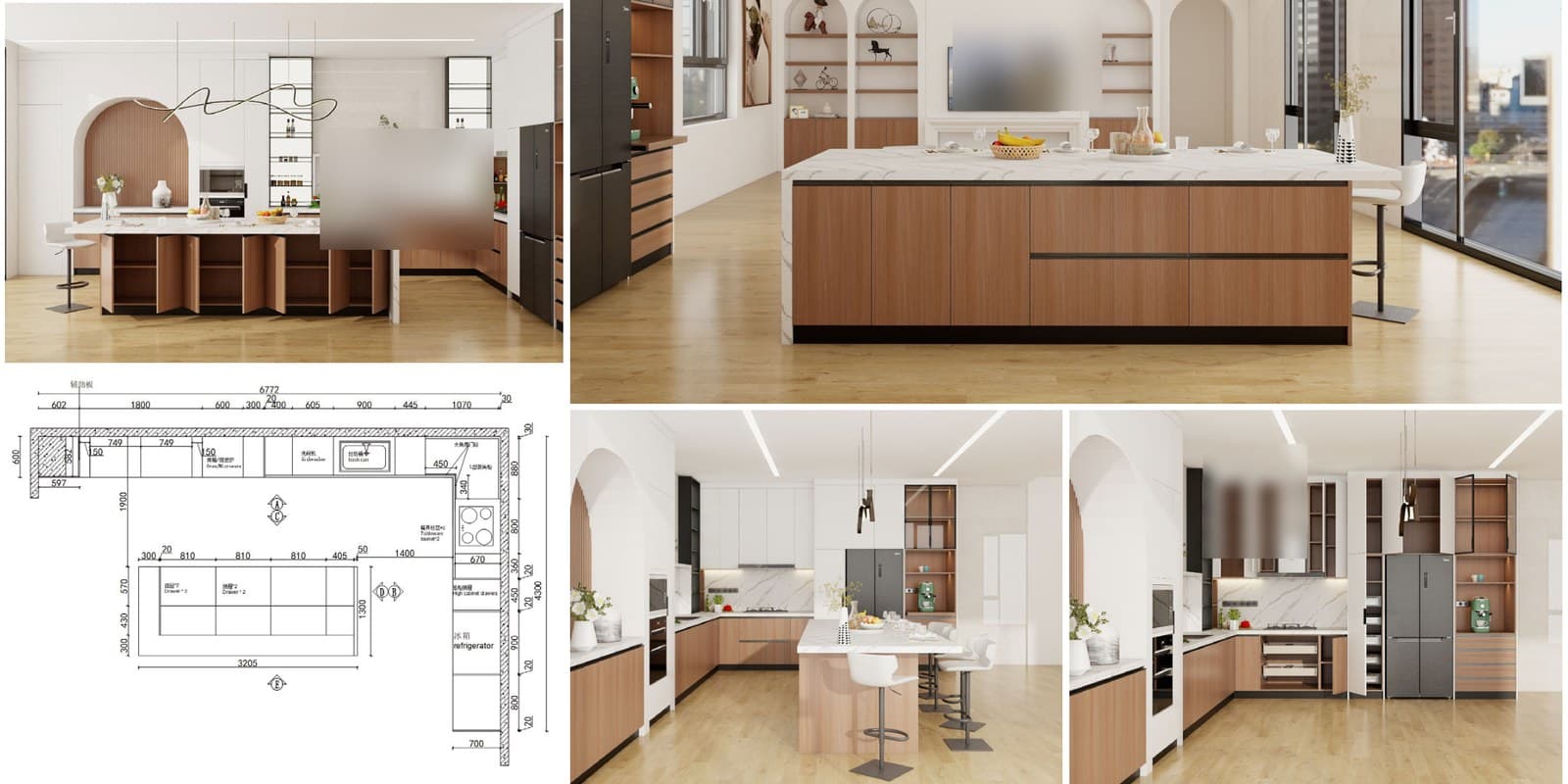
A kitchen layout drawing helps show the structure of the room. It tells the team where walls, doors, windows, island areas, washing zones, cooking zones, and circulation routes may be located. When this information is reviewed together with a BOQ or room schedule, the cabinetry direction becomes easier to organize across multiple rooms or project units.
For overseas project teams, this is especially useful when many spaces need to follow a consistent design direction while still allowing room-specific adjustments.
A material brief can also help George understand the preferred finish direction, color tone, and surface feeling. Reference images are useful because they communicate the atmosphere the project team wants to achieve, such as a warmer residential kitchen, a cleaner apartment kitchen, or a more refined hospitality interior.
Instead of treating each element separately, George can review these materials together and help the client move toward a clearer custom cabinetry direction.
Review the Room Layout and Cabinet Arrangement
Once the basic project information is ready, the next step is to understand how the kitchen space should work.
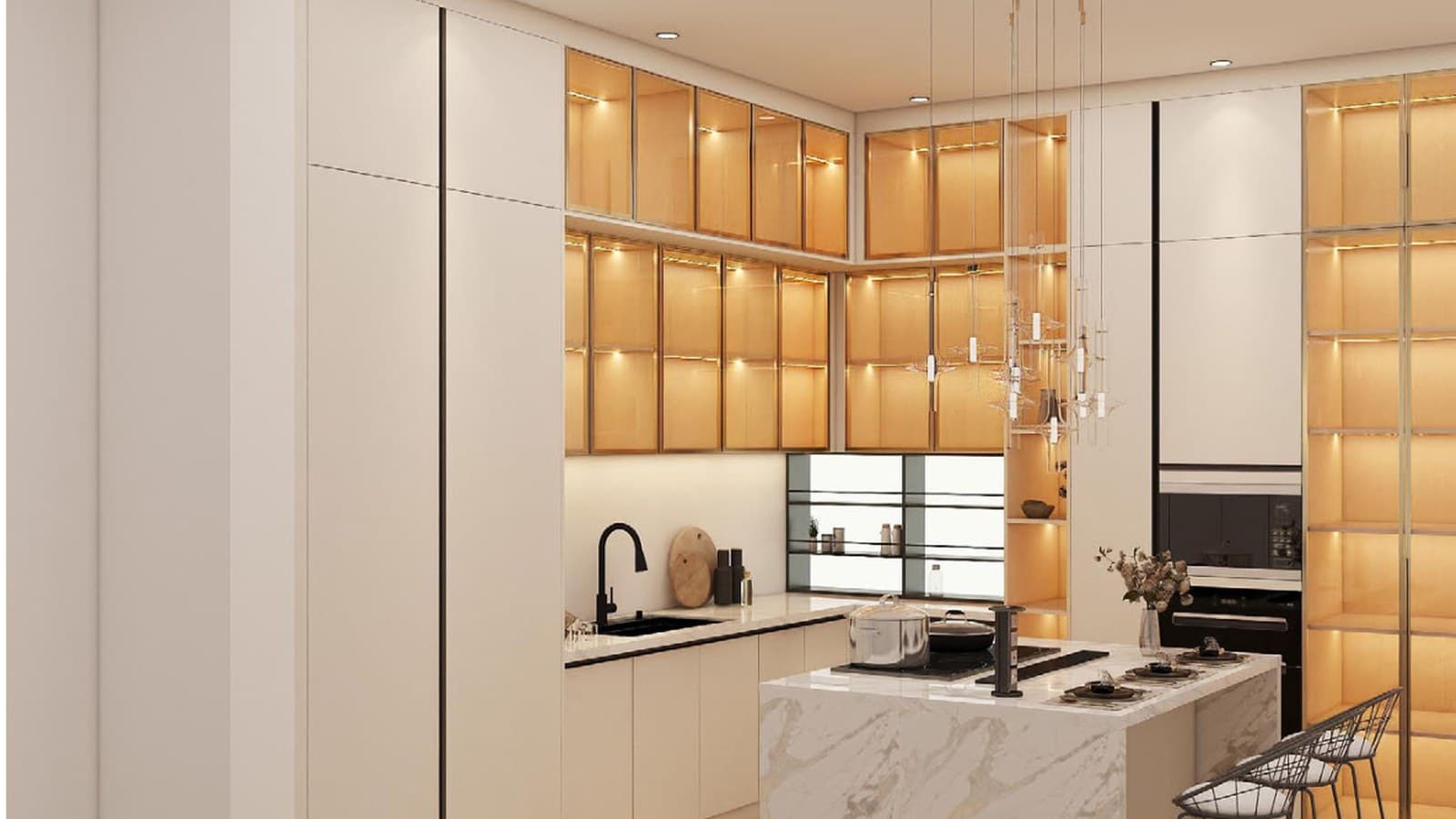
Kitchen cabinetry planning can consider the relationship between wall cabinets, base cabinets, island placement, tall storage, countertop areas, and movement through the room. The arrangement may also need to respond to doors, windows, lighting, adjacent dining areas, and other room conditions.
For example, an island kitchen may require a different storage and circulation review from a compact apartment kitchen. A villa kitchen may place more emphasis on visual openness and integrated storage, while a serviced residence may need a clean, repeatable cabinetry direction across multiple units.
George can review these layout factors with the project team before matching suitable cabinetry options.
Define Functional Zones for Daily Use
A kitchen becomes more practical when the functional zones are considered early.
Project teams can review how storage, preparation, washing, cooking, and appliance positions should relate to each other. Wall cabinets, base cabinets, tall cabinets, open shelves, and island storage can each support different daily-use needs.
For residential and hospitality projects, this kind of functional review helps the kitchen feel more considered. The goal is not only to make the cabinet layout look attractive, but also to make the space easier to use, easier to understand, and easier to coordinate with the broader interior plan.
Our team can review kitchen cabinetry directions around storage needs, cooking workflow, washing areas, countertop use, and preferred cabinet arrangement.
Align Style, Color, and Finish Direction
After the layout and functional direction are clear, the project team can begin refining the appearance of the kitchen.
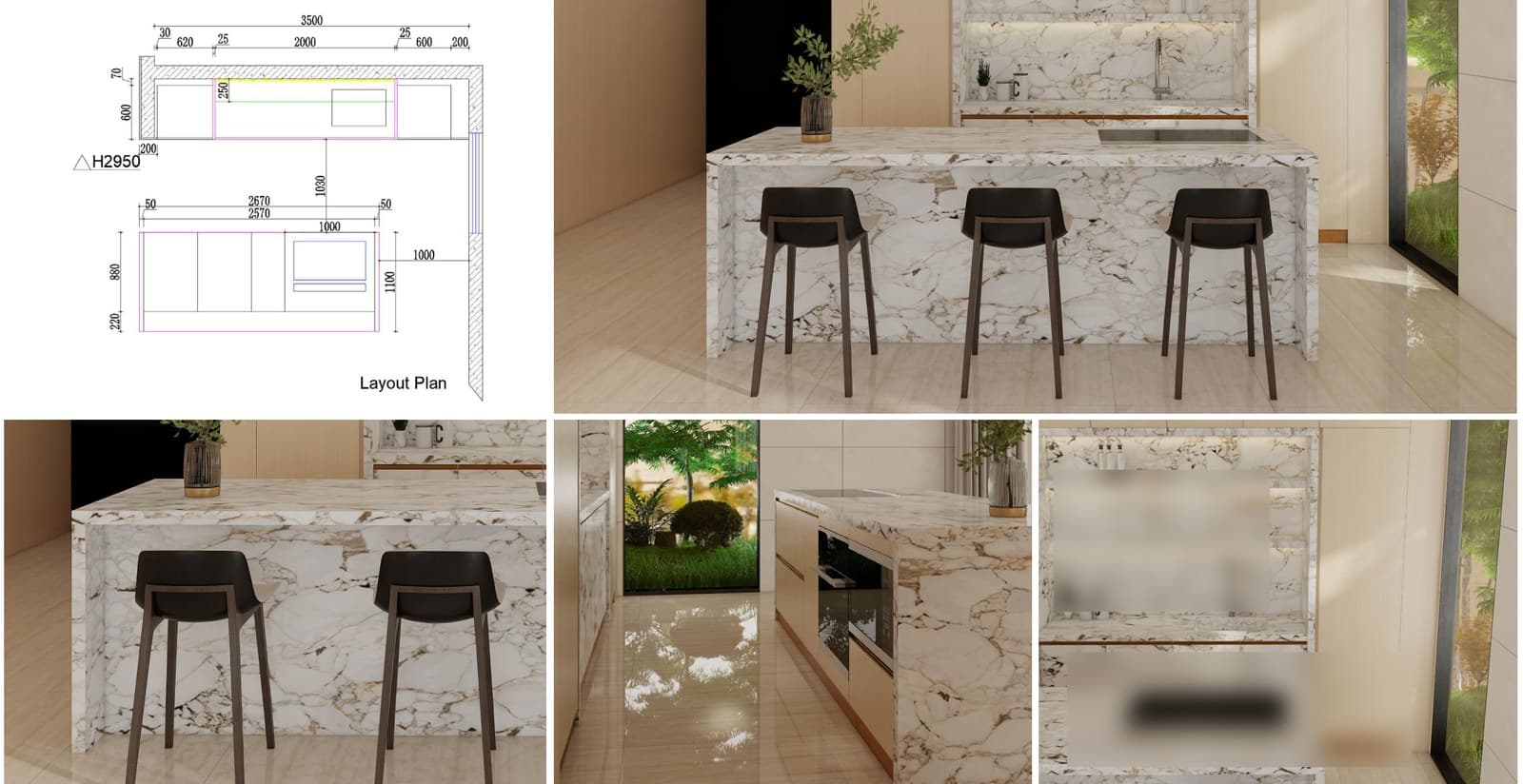
Finish direction can influence how the kitchen feels within the wider interior. A lighter cabinet surface may support a clean apartment or serviced residence direction. A deeper tone may create a stronger, more refined atmosphere for villas or hospitality interiors. Surface preference, color tone, cabinet door style, and surrounding materials should be reviewed together.
PET and melamine finish references can be discussed as finish directions based on the project's style, surface preference, and material brief. These references can help George understand the visual direction the project team wants to explore.
At this stage, the purpose is not to lock the project into a single catalog image. The better goal is to align the overall style direction before George reviews suitable configurations and next-step coordination.
Use Reference Images to Communicate Expectations
Reference images are helpful because they can express design expectations quickly.
They can show the preferred cabinet proportion, door style, color mood, storage style, lighting atmosphere, and the balance between open and closed storage. This helps the project team communicate what they want the kitchen to feel like before detailed review begins.
For B2B projects, reference images are especially useful when developers, designers, contractors, and procurement teams need to align on the same direction. They help reduce misunderstanding and make the discussion more visual.
George can use reference images together with layout drawings and material briefs to better understand the project direction. From there, suitable cabinetry options can be reviewed based on the actual room conditions and project needs.
What to Send George for Review
To make the kitchen cabinetry review more efficient, project teams can prepare kitchen layout drawings, BOQ, room schedule, material brief, reference images, preferred finish direction, appliance position requirements, site photos or site condition notes, installation needs, and expected project use, such as apartment, villa, hotel, serviced residence, or commercial interior.
The more clearly these details are shared, the easier it becomes for George to understand the project direction and review suitable custom cabinetry options.
If your team already has layout drawings, a room schedule, or a material brief, George can help review the next suitable direction for your kitchen cabinetry package.
Review Kitchen Cabinetry Options for Your Project
Send George your kitchen layout drawings, BOQ, room schedule, material brief, reference images, and site conditions. Our team can help review suitable cabinetry directions and coordinate the next step for your project.