Plan Pantry and Laundry Storage as Utility Spaces
Pantry and laundry rooms may be secondary spaces, but they can strongly affect how organized and practical a project interior feels.
For apartments, villas, serviced residences, and hospitality interiors, these areas often support daily routines behind the main living spaces. A pantry may need tall storage, open shelving, closed cabinets, drawers, and countertop areas. A laundry or utility room may need to coordinate appliance positions, washing and drying zones, folding space, hanging areas, sink positions, and storage cabinets.
That is why pantry and laundry cabinetry should be reviewed as part of the overall room planning process, not only as separate cabinet selections.
George can help project teams review pantry and laundry cabinetry directions based on drawings, room dimensions, room schedules, appliance position requirements, storage needs, finish preferences, reference images, site conditions, and installation-related notes or requirements.
Start With Drawings, Room Dimensions, and Appliance Positions
A pantry or laundry cabinetry direction should begin with the room itself.
Room dimensions help clarify available wall length, depth, ceiling height, circulation, and usable storage areas. Layout drawings help show door positions, sink locations, countertop direction, storage walls, appliance positions, and the relationship between utility cabinetry and the surrounding space.
For projects with multiple apartments, villas, serviced residences, or hospitality rooms, a room schedule can also help organize repeated pantry or laundry requirements across different units.
When these details are reviewed early, the cabinetry direction becomes easier to coordinate. The project team can clarify where open storage may be useful, where closed cabinets may create a cleaner appearance, where countertop areas are needed, and how appliance positions may affect the room layout.
George can study these project materials together with the client before reviewing suitable pantry or laundry cabinetry directions.
Pantry Cabinetry for Organized Household Storage
A well-planned pantry can support daily household use while keeping the surrounding interior more organized.
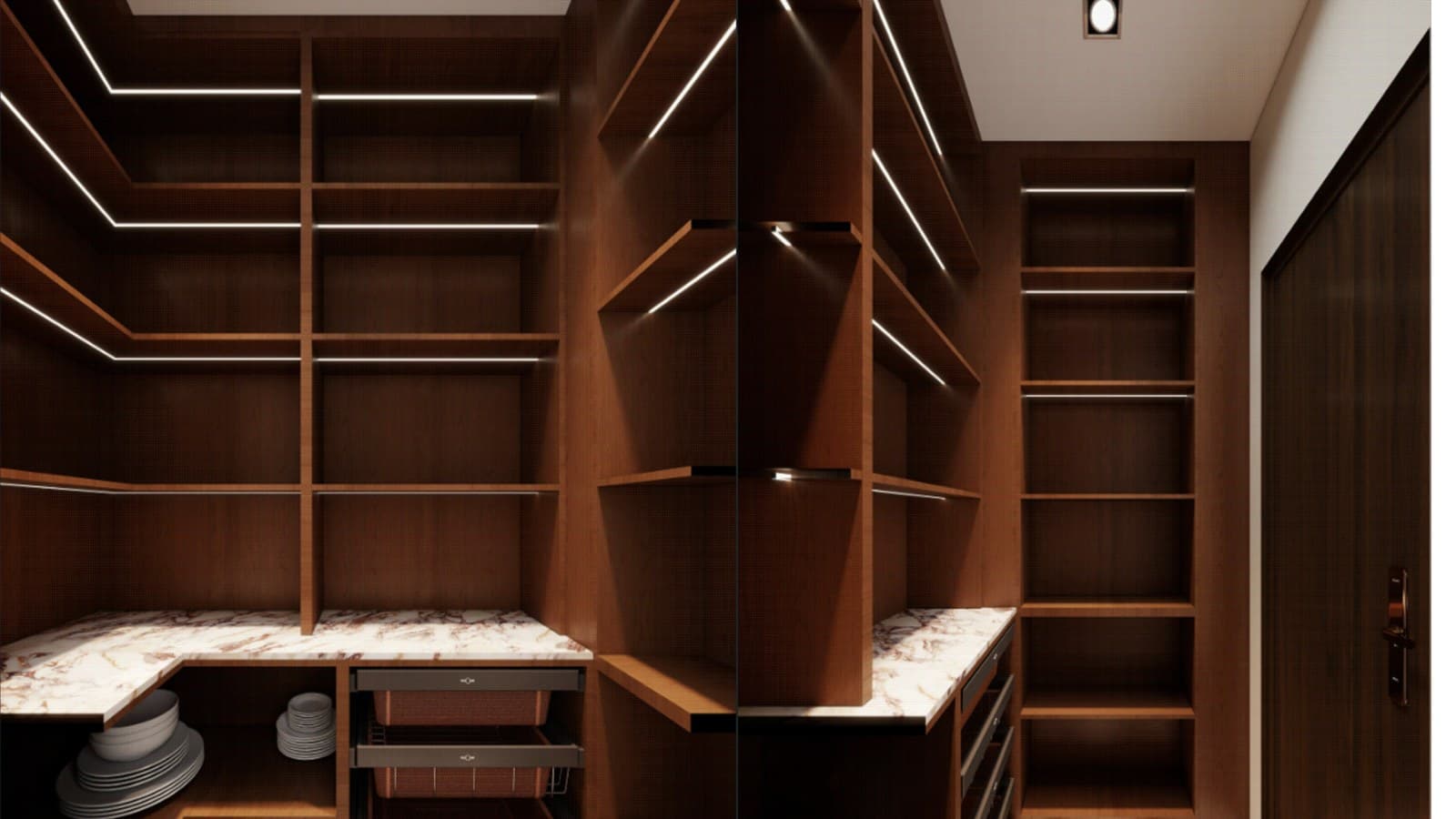
Pantry cabinetry may include tall storage, open shelves, closed cabinets, drawers, and countertop areas. Open shelving can make frequently used items easier to organize, while closed cabinets can create a cleaner and quieter storage appearance. Countertop areas may support sorting, preparation, or daily-use tasks depending on the room layout.
The right pantry direction depends on the available space, expected storage needs, room schedule, finish direction, and the way the pantry connects with nearby rooms such as kitchens, corridors, dining areas, or service spaces.
George can help project teams review pantry layouts based on room dimensions, storage needs, reference images, and material direction, so the storage area feels intentional rather than secondary.
Laundry Cabinetry for Washing, Drying, Folding, and Hanging Zones
Laundry cabinetry planning can bring several utility functions into one clearer room direction.
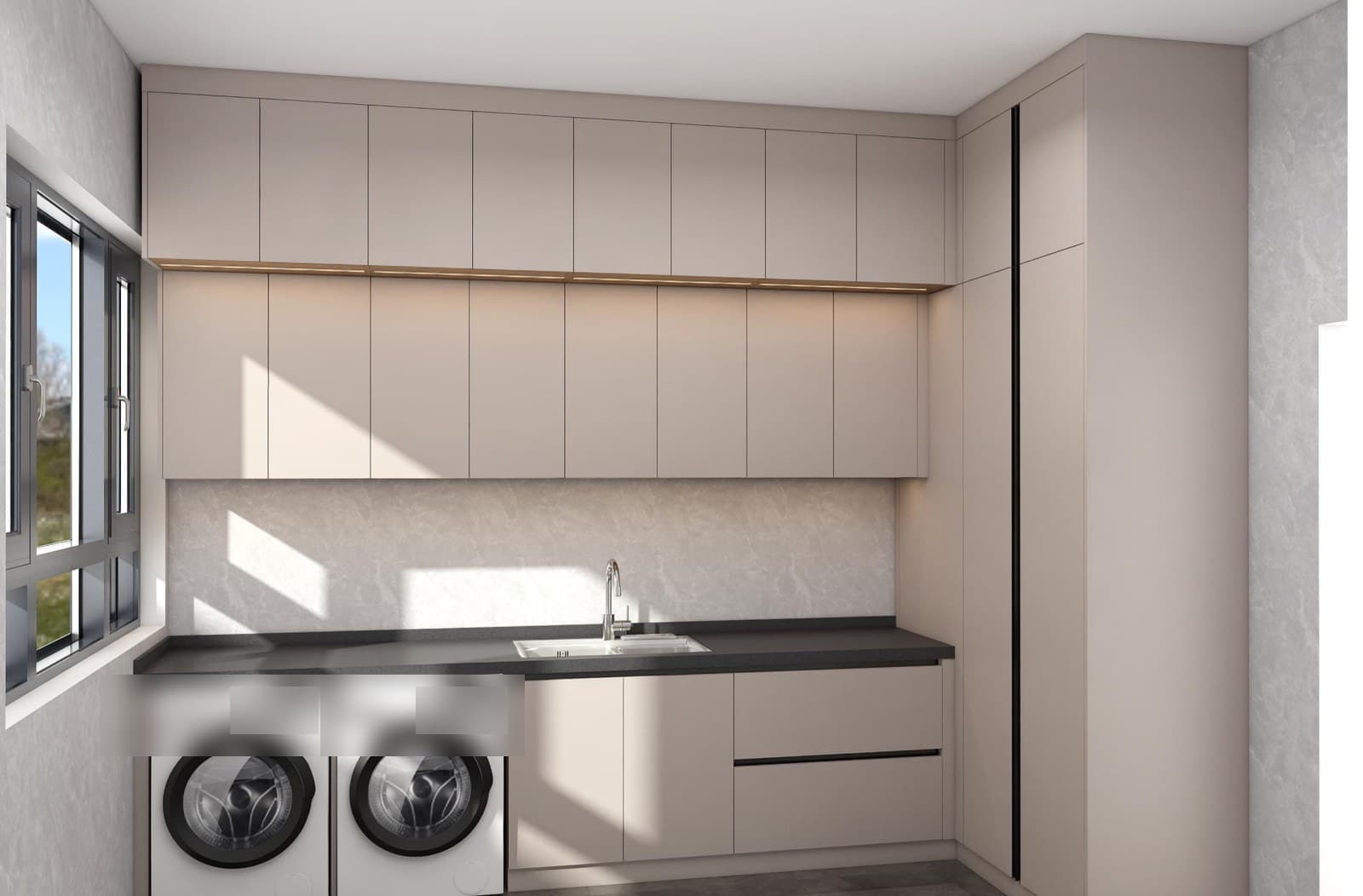
Washing and drying zones, folding areas, hanging space, sink positions, countertop use, upper cabinets, tall cabinets, and lower storage may all affect how the laundry room should be organized. Appliance position review helps cabinetry planning respond to the actual utility room arrangement and available room conditions.
For apartments and serviced residences, laundry cabinetry may need to be compact, repeatable, and easy to understand. For villas or hospitality interiors, utility areas may need more storage flexibility, more countertop space, or a more refined finish direction.
George can review appliance positions, storage requirements, site conditions, and room dimensions together with the project team before matching suitable laundry cabinetry directions.
Coordinate Finish Direction With the Interior Scheme
Even practical storage rooms can contribute to the overall interior atmosphere.
Finish direction, cabinet proportions, open and closed storage, countertop use, and lighting atmosphere can be reviewed together so pantry and laundry areas feel connected to the wider interior scheme. Lighter finishes may support a clean utility look, while deeper tones may create a warmer storage-room atmosphere.
For project interiors, visual continuity can matter even in support spaces. Pantry and laundry cabinetry may need to coordinate with nearby rooms and interior finishes.
The goal is not to overcomplicate a utility room. The goal is to make pantry and laundry spaces feel planned, practical, and aligned with the overall project interior direction.
Share Project Information for Cabinetry Review
To make the review more efficient, project teams can prepare pantry or laundry layout drawings, room dimensions, room schedule, storage needs, appliance position requirements, sink position or countertop needs, finish direction, reference images, site photos or site condition notes, installation-related notes or requirements, and expected project use such as apartment, villa, serviced residence, or hospitality interior.
The clearer these materials are, the easier it becomes for George to understand the utility storage direction, review suitable pantry or laundry cabinetry options, and coordinate the next step with the project team.
If your team already has layout drawings, room dimensions, appliance position requirements, or storage needs, George can help review the next suitable direction for your pantry or laundry cabinetry.
Review Pantry and Laundry Cabinetry Directions with George
Send George your pantry or laundry layout drawings, room dimensions, room schedule, storage needs, appliance position requirements, finish direction, reference images, and site conditions. Our team can help review suitable pantry and laundry cabinetry directions for your project.