A gym equipment zone, a school playground, a hotel fitness center — each space puts different demands on the floor. Rubber flooring allows clients to match tile format, thickness, and surface finish to the actual use of each area, rather than applying one material across every room.
For B2B project teams, rubber flooring selection is not only about choosing a black mat or color pattern. The flooring type, tile or roll format, thickness range, backing structure, surface finish, room function, expected use, and site condition all affect the final specification.
George rubber flooring references include gym rubber floor mats, rubber rolls, color-speckled rubber tiles, interlocking puzzle mats, outdoor rubber floor mats, rubber sound-insulation products, and rubber cushion references. These options help project teams review flooring configurations for different activity zones, fitness areas, and commercial spaces.
If you are planning rubber flooring for a gym, school, playground, or commercial activity space — and need to connect equipment layout, floor zones, and material selection before requesting a quotation — this guide covers the key decisions George can support.
“A practical rubber flooring specification starts with the project zone: equipment areas, activity rooms, playground surfaces, and acoustic spaces may each require a different tile, roll, thickness, or installation approach.”
Clarify the rubber flooring category
Rubber flooring should be reviewed separately from SPC flooring, engineered wood flooring, and commercial resilient sports vinyl flooring.
SPC flooring is usually reviewed as rigid core click-lock planks or tiles. Commercial resilient and sports vinyl flooring is usually reviewed by sheet or roll formats for sports courts and activity layouts. Engineered wood flooring is reviewed by timber structure, veneer thickness, plank format, and interior design selection.
Rubber flooring has a different project role. It is commonly selected for gyms, activity zones, playground references, and heavy-use areas where floor surface, thickness, impact zones, equipment layout, and installation method need to be reviewed together.
George rubber flooring references include tile formats, roll formats, interlocking mats, outdoor rubber surface references, and sound-insulation rubber products. For project teams, the best approach is to match each rubber flooring type with the room function and project requirement instead of forcing one format across every area.
If a project needs rigid click-lock flooring, the SPC Flooring Guide is a better reference.
If a project needs sheet-format sports vinyl or commercial resilient flooring, the Commercial Resilient & Sports Vinyl Flooring Guide is a better reference.
If a project needs natural timber appearance and engineered wood structures, the Engineered Wood Flooring Guide is a better reference.
This article focuses only on rubber flooring and related rubber surface references.
Review rubber flooring formats: tiles, rolls, and interlocking mats
Different rubber flooring formats support different project areas. Before comparing quotations, project teams benefit from reviewing room function, floor area, thickness range, installation method, and expected use together.
Composite rubber floor mats
George composite rubber mat references are available in 50 x 50cm and 100 x 100cm formats, with thickness ranging from 1.5cm to 5.0cm.
This format may suit gym areas, activity zones, and spaces where a thicker rubber floor mat is preferred. The catalog also shows bottom structure references such as grooved or column-style support patterns, which can be matched with project layout, drainage direction, and installation requirements.
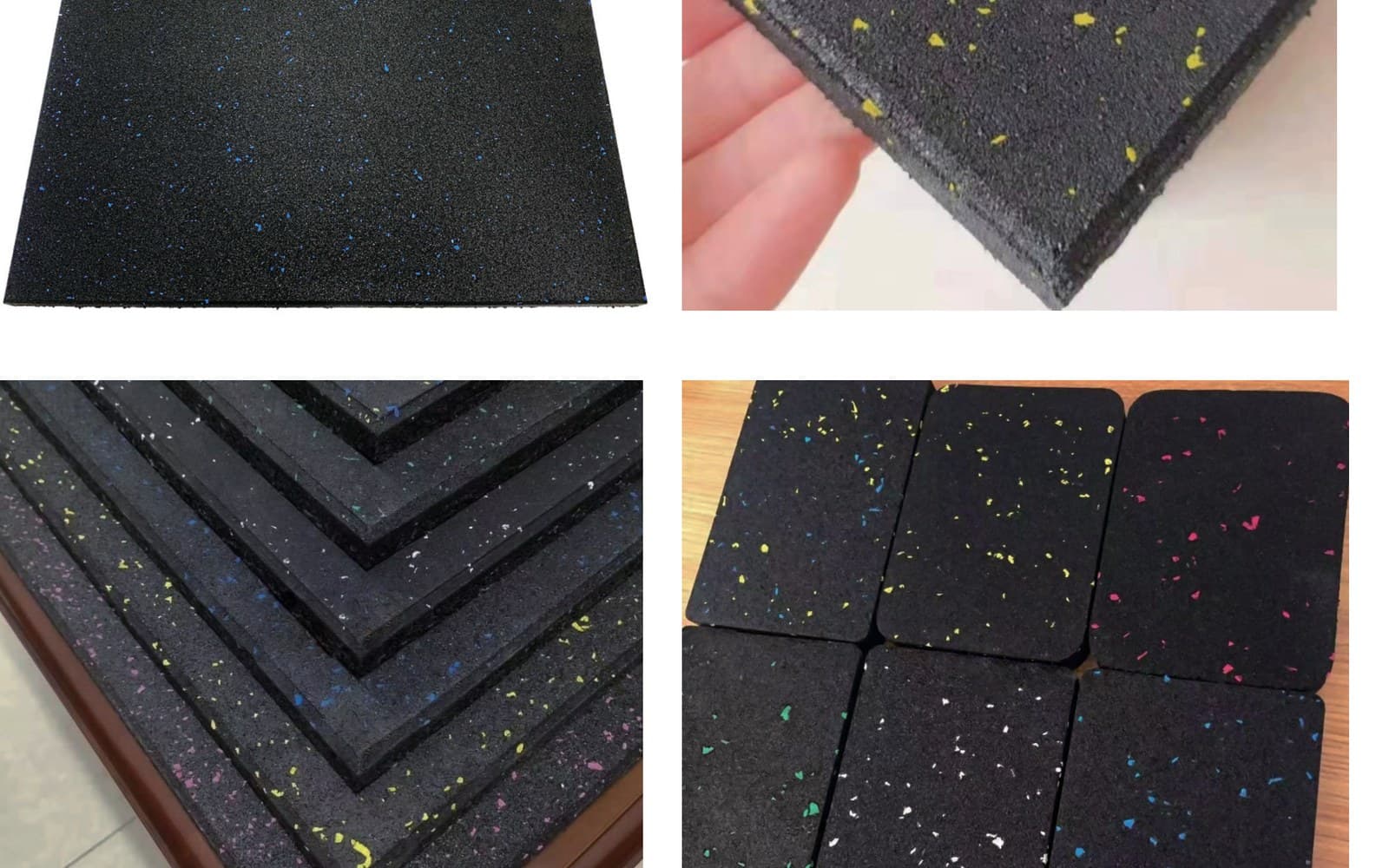
Color-speckled SBR / EPDM rubber tiles
Available tile formats include 500 x 500mm and 1000 x 1000mm, with flat-bottom options at 15mm–25mm and grooved-bottom options at 20mm–35mm.
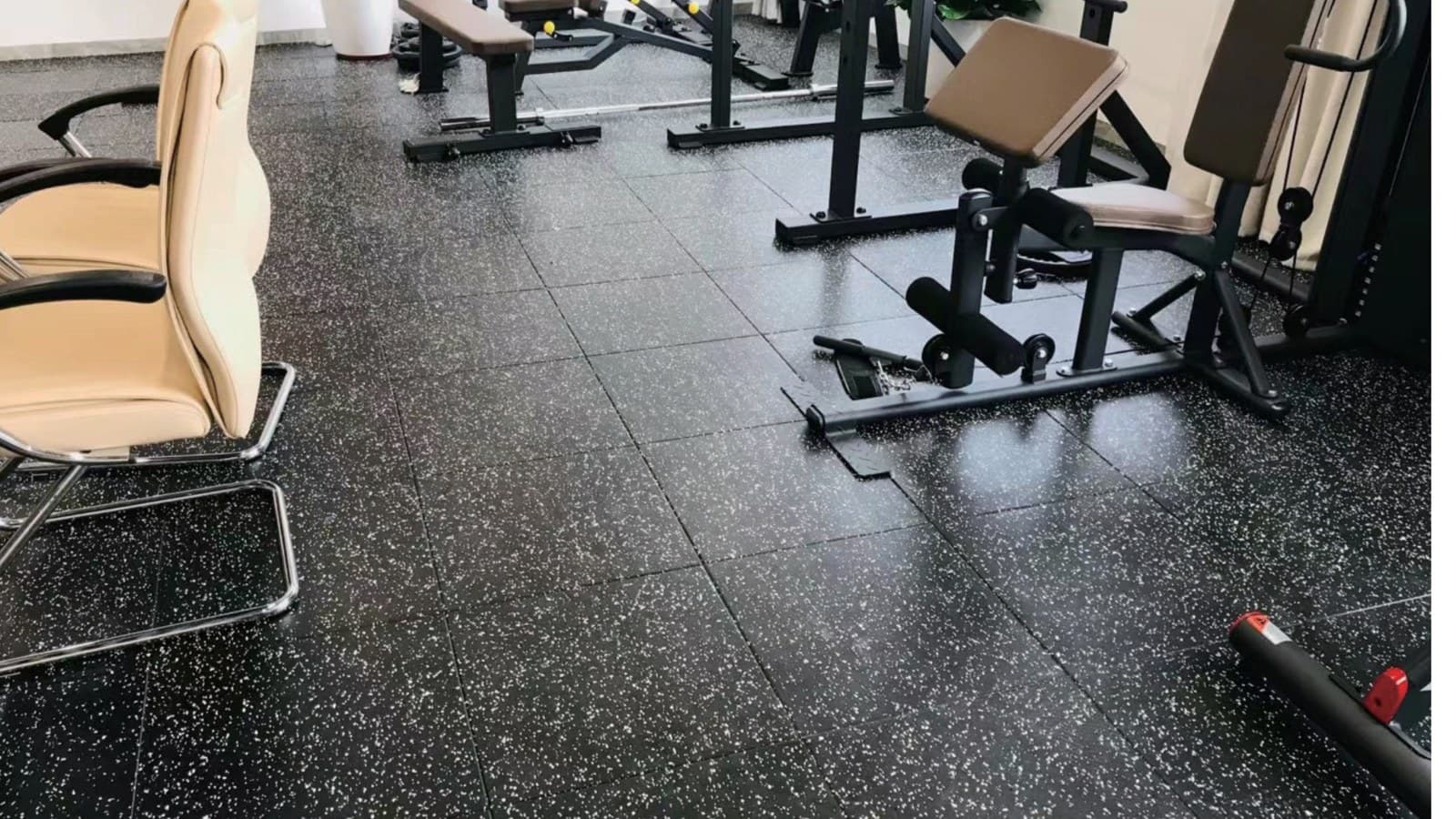
The catalog includes black rubber with color-speckled surface references, as well as pure black options. These formats support gyms, fitness rooms, activity areas, offices, commercial areas, and other spaces where color selection and functional surface planning need to be considered together.
Rubber rolls
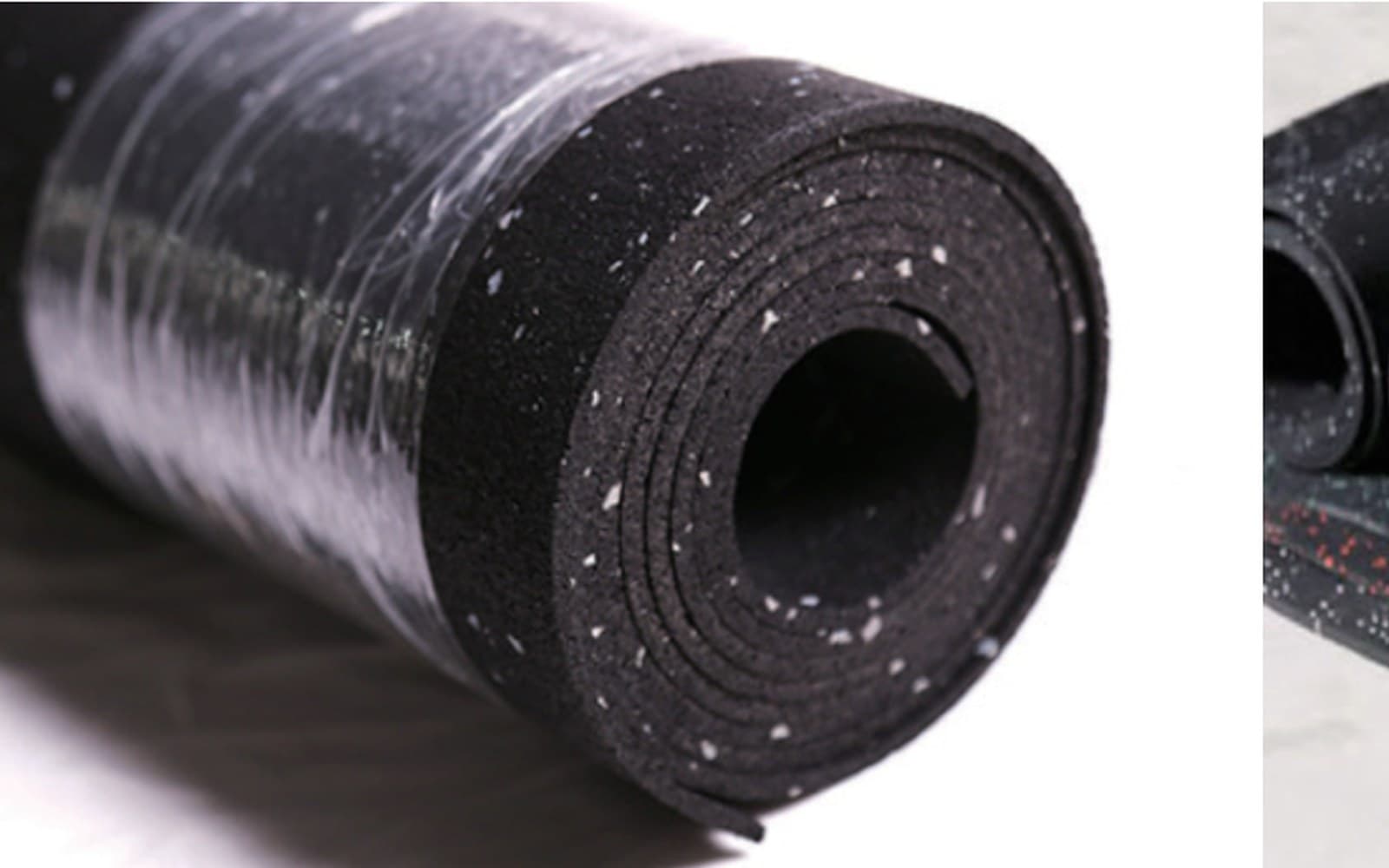
George rubber roll options cover 1m–1.25m width with thickness from 3mm to 12mm.
Rubber roll options may suit larger areas where a roll-format rubber flooring selection is preferred. This format can be specified for fitness spaces, commercial activity areas, and other zones where floor area, roll direction, installation method, and maintenance planning should be coordinated early.
Interlocking puzzle rubber mats
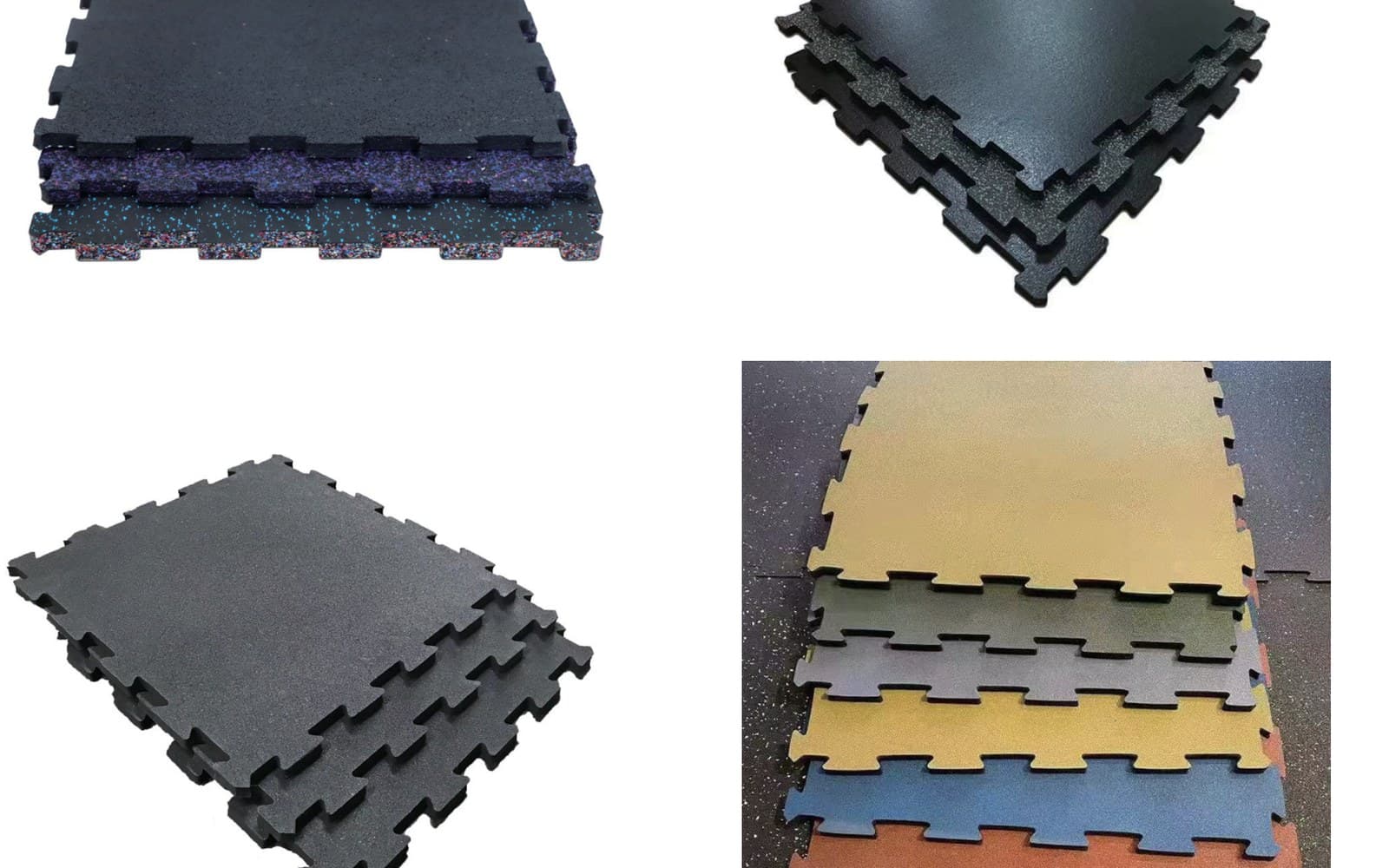
Representative catalog references include 485 x 485mm, 985 x 985mm, and 10mm / 15mm / 20mm thickness options.
Interlocking puzzle mats support modular installation and flexible layout planning. The catalog references a puzzle-lock interlocking profile, which can help project teams review flooring layout, replacement planning, and installation coordination based on room dimensions.
Outdoor rubber tiles
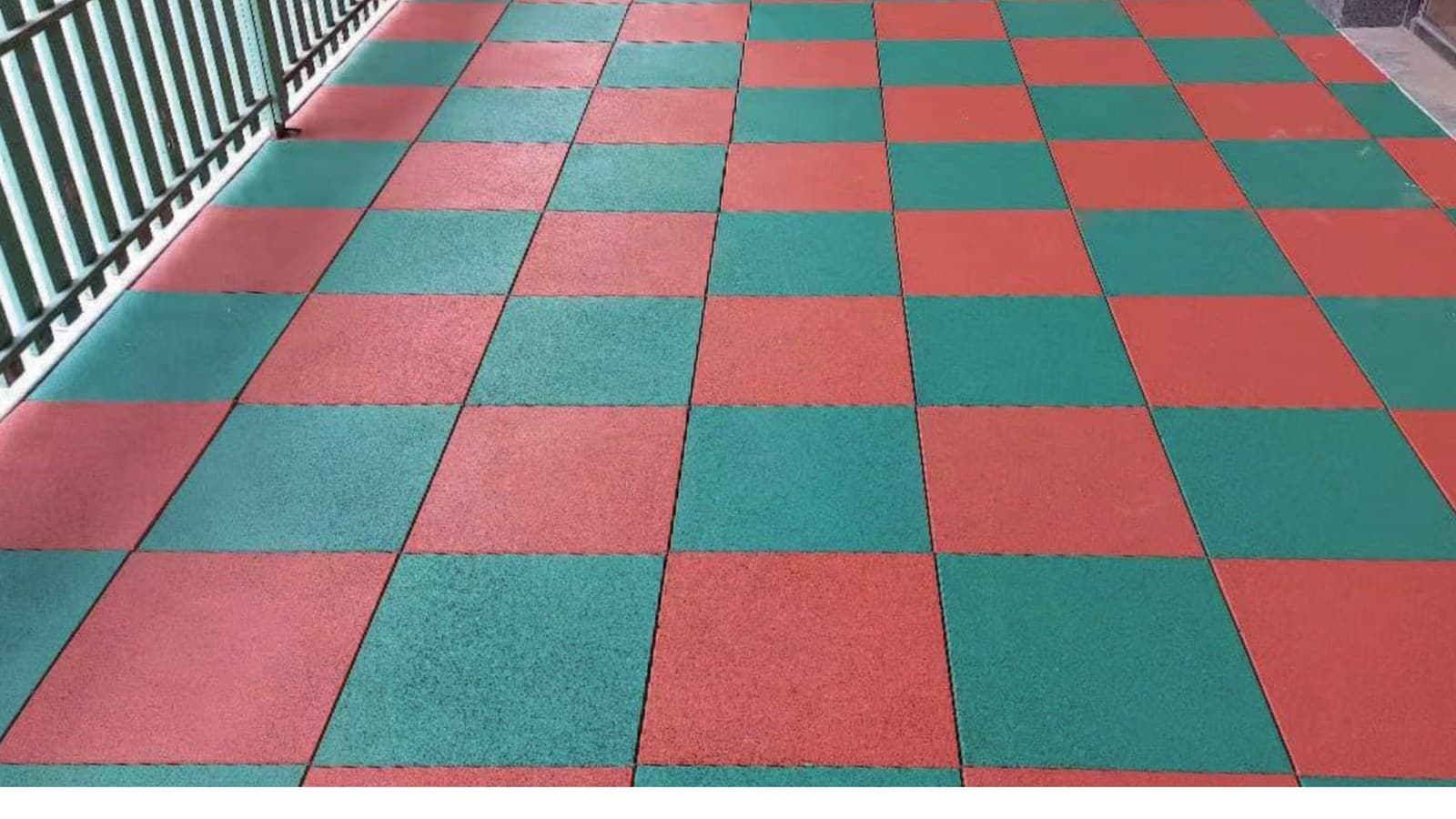
Representative catalog references include 50 x 50cm and a 1.5cm - 5.0cm thickness range.
Outdoor rubber tiles can be specified for playgrounds, outdoor activity areas, and recreational zones where site condition, thickness range, surface texture, and installation method need to be reviewed together. The catalog references a dual-density structure direction, which can be reviewed with George based on project drawings, activity area layout, and site requirements.
Match rubber flooring with project spaces
Rubber flooring should be matched by area, not selected as one single material for every room.
Project teams can divide the specification by zone: gym equipment areas may require thicker tile or mat formats; free training zones may need a surface selection that supports movement, cleaning, and layout planning; activity rooms may require color and pattern coordination; playground or outdoor activity areas may need rubber surface references reviewed by site condition, thickness range, and installation method.
Commercial activity zones may need a balance between visual selection, durability expectations, and maintenance planning. Acoustic or sound-insulation areas may require separate rubber underlayment or sound-insulation product review.
The current catalog includes visual references for gym floor areas, outdoor activity surface references, rubber tile warehouse visual references, rubber rolls, interlocking mats, and sound-insulation rubber products.
For specialty areas such as horse stable mats, shooting range rubber panels, basketball court cushions, or acoustic underlayment systems, George can help project teams review suitable product references based on the project scope, drawings, and technical requirements. These specialty selections should be handled through project-specific specification review rather than general article assumptions.
Review technical requirements without over-specifying early
Rubber flooring technical requirements are most useful when they are matched to the actual project location, room function, and local submission requirements.
Project teams may need to review tile or roll format, thickness range, surface texture and color reference, backing or bottom structure, room use and equipment layout, subfloor and installation condition, indoor or outdoor use, cleaning and maintenance expectation, and local fire, safety, environmental, or acoustic submission requirements if applicable.
Some George rubber flooring references include technical data such as hardness, tensile strength, compression indentation, friction coefficient, and chemical testing references. These details can support early specification discussion, while final technical documents should align with the project's local requirements, submission needs, and selected product configuration.
For fire-related, acoustic, safety, or environmental requirements, George can help review available documents and project-specific options during specification coordination.
Selection checklist for project teams
Before requesting rubber flooring support, project teams can prepare the following information.
1. Project type: gym, fitness center, school, playground, activity room, office, retail, hotel, or commercial space.
2. Room schedule: which spaces need rubber flooring and which areas need other flooring systems.
3. Flooring area: room-by-room dimensions or BOQ is preferred.
4. Zone function: equipment area, free training zone, children's activity area, outdoor activity area, acoustic zone, or commercial activity zone.
5. Format preference: rubber tile, rubber roll, interlocking mat, outdoor rubber tile, or underlayment reference.
6. Thickness direction: required range or preferred flooring build-up if already known.
7. Surface preference: pure black, black with colored flecks, custom color direction, or other visual reference.
8. Installation condition: subfloor, site condition, indoor / outdoor use, and installation method.
9. Technical requirements: fire, acoustic, environmental, or safety-related documents if the project requires them.
10. Project support needs: samples, layout review, packing, shipment, remote guidance, or on-site installation arrangement when required.
With these details, George can help review suitable rubber flooring references and support clearer material selection and quotation discussions.